



Galloway, N.J. – Naz Onel, professor of Business Administration at Stockton, has been a passionate educator in sustainability marketing and its continuous
evolution as times and consumer needs change across the globe.

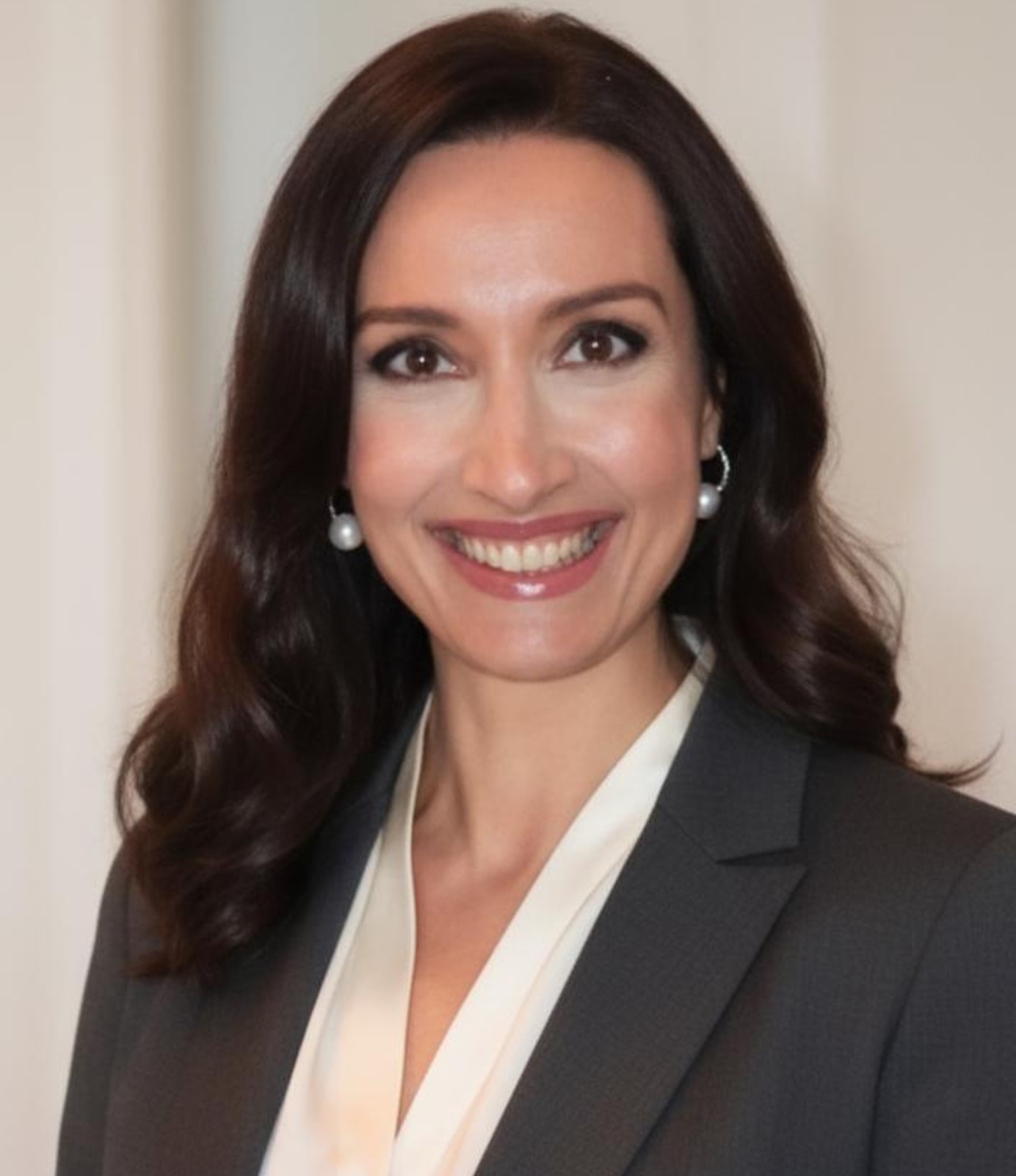
Onel has long relied on the foundational publications of professors Frank-Martin Belz from the Technical University of Munich in Germany and Ken Peattie from Cardiff Business
School in the United Kingdom throughout her teaching career. She recently had the
opportunity to co-author the third edition of “Sustainability Marketing: A Global Perspective” with them and discusses the inspiration behind it, the discoveries and trends they
found, and what she hopes educators can learn from it.
🌿 What motivated you to co-author “Sustainability Marketing: A Global Perspective,”
and what key updates set this third edition apart?
The motivation came from recognizing that sustainability is no longer a peripheral
concern; it is now a defining force shaping how businesses compete, innovate and lead
globally. My research has long centered on the intersection of business, marketing,
sustainable consumer behavior, and corporate sustainability management, with the goal
of advancing responsible business practices that create lasting impact. More than
a decade ago, I developed a Sustainability Marketing course at Stockton, which continues
to reach full enrollment each year. Over the years, I also designed several undergraduate
and graduate courses connecting sustainability, management, and marketing, all driven
by the same mission: to prepare future leaders to make informed, ethical, and forward-thinking
decisions. The strong enthusiasm and engagement from students reaffirmed the need
for a textbook that bridges rigorous theory with real-world application.
As someone deeply engaged in corporate sustainability and sustainability marketing,
I pay close attention to both global trends and the voices of our students. That perspective
guided my creation of the MBA concentration in Global Business Sustainability, which
was designed based on both market data and student demand for forward-thinking, sustainability-driven
business education.
This remains the only textbook in the field with a truly global perspective. We were
intentional in selecting examples and case studies from across the world, not limited
to any single region, and our own international backgrounds as co-authors helped bring
that balance to life. We also made a conscious effort to highlight companies led by
diverse leaders representing different ethnicities, genders, and backgrounds, emphasizing
diversity, equity, and inclusion as essential dimensions of the societal aspect of
sustainability.Naz Onel
The third edition reflects the dramatic changes shaping today’s business and societal
landscape. It expands coverage to include circular economy models, digitalization
and AI, the UN Sustainable Development Goals (SDGs), and contemporary issues such
as brand activism, greenwashing, and consumer trust. Our aim was to ensure that the
book equips students, educators, and practitioners to navigate the complexities of
sustainability with both insight and integrity.
Importantly, this remains the only textbook in the field with a truly global perspective.
We were intentional in selecting examples and case studies from across the world,
not limited to any single region, and our own international backgrounds as co-authors
helped bring that balance to life. We also made a conscious effort to highlight companies
led by diverse leaders representing different ethnicities, genders, and backgrounds,
emphasizing diversity, equity, and inclusion as essential dimensions of the societal
aspect of sustainability.
🌿 Did you and your co-authors encounter any particularly surprising findings when
updating or writing this edition?
Yes. One of the most striking findings was how rapidly and extensively digital technologies,
including AI, are reshaping sustainable corporate practices and marketing. They offer
powerful tools for personalization, customer engagement, data-driven decision-making
and driving innovative sustainable solutions, but also raise significant challenges
around consumer trust, data center sustainability, data asymmetries and societal polarization.
Another surprising insight came from our global case research: some of the most innovative
sustainability practices are emerging from smaller, agile enterprises and start-ups
rather than solely from large corporations. These new players are pioneering creative
models in areas such as sharing economies, sustainable supply chains, product-service
systems, and clean technologies.

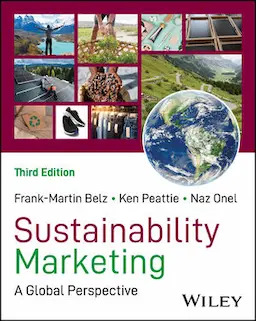
“Sustainability Marketing: A Global Perspective” textbook.
The process itself was more intensive than we initially anticipated. The expansive
nature of sustainability in today’s business environment, combined with our global
approach, required numerous discussions among the co-authors to align perspectives
and make decisions on chapters, case studies, and teaching materials. Collaborating
closely with such accomplished and insightful scholars was incredibly enriching, and
the final edition is a product of that collective effort, which we are all proud of.
🌿 How do you hope this book will influence both business education and business practice
in the coming years?
We aim for the book to serve as a definitive resource that connects academia and practice.
In education, it provides a structured framework, global case studies, and practical
tools that make sustainability an integral part of business curricula rather than
an add-on. In business practice, the goal is to help corporate leaders, marketing
professionals, and entrepreneurs move beyond superficial sustainability claims and
embed authentic, measurable impact into their strategies. Ultimately, we want to empower
students and professionals to become change agents who can drive innovation, maintain
brand trust, and act with ethical responsibility.
🌿 From your research, what emerging sustainability trends should today’s marketers
and students be paying closest attention to?
Several emerging trends are particularly important for today’s students, marketers
and business leaders. Transparency and traceability in supply chains are becoming
essential, as consumers increasingly demand credible and verifiable sustainability
practices. Circular economy thinking, including sharing models, product-service systems,
and value co-creation, is transforming how companies create, deliver, and communicate
value.
Artificial intelligence and digital technologies are reshaping sustainability management
and marketing, enabling predictive analytics, optimized resource use, and data-driven
decision-making that strengthens corporate sustainability strategies. Companies that
leverage AI effectively can integrate sustainability goals into business operations,
marketing campaigns, and performance measurement in ways that were previously difficult
to achieve. The integration of the UN SDGs into business strategy is also accelerating,
creating opportunities for innovation and reinforcing accountability. Corporate sustainability
reporting, alongside traditional financial reporting, is becoming standard practice.
Companies need knowledgeable managers and business leaders who can interpret these
reports, link sustainability performance to strategy, and make informed decisions
that drive real impact.
These trends highlight the importance of embedding sustainability into the core of
business and marketing strategy and preparing the next generation of business leaders
to balance innovation, brand trust, and measurable environmental and societal impact.
🔎 Previous Spotlights:
🌿 How does your work on this book influence the way you teach or design projects for
your business courses at Stockton?
This happened in a circular manner, similar to a circular economy. My teaching and
research shaped the book, and in turn, the book shapes the way I teach. It provides
a strong theoretical foundation paired with global, real-world cases, which I integrate
directly into my courses.
With my background in sustainability-focused research and curriculum development,
I design courses to challenge students intellectually while equipping them with practical
skills. Students go beyond learning concepts; they apply them through projects that
mirror the challenges highlighted in the book, such as analyzing greenwashing risks,
developing corporate sustainability reports, evaluating brand activism strategies,
or conducting life cycle assessment projects.
In courses I have developed, including Global Sustainability and Marketing and Corporate
Sustainability Strategies, we emphasize critical thinking, systems analysis, and theory,
always applied to real-world challenges through simulations, case studies, or hands-on
projects. This approach connects scholarship with practice and prepares students to
navigate the ethical, social, and environmental dimensions of business, marketing,
and corporate management. By combining academic literature, global case studies, and
applied projects, students graduate not only knowing what to think but also how to
apply it effectively.
🌿 What sparked your own passion for sustainability, and what keeps you inspired outside
of the classroom and research?
My passion for sustainability comes from recognizing the profound impact business
decisions have on society and the environment. I realized that corporations are not
merely economic actors; they have the power to drive the environmental and societal
changes we all seek, and their leadership can produce meaningful, lasting impact.
In a field as dynamic as sustainability, rigor and relevance must go hand in hand,
which aligns closely with my own values.
What keeps me inspired outside the classroom and research is seeing the creativity
and determination of students, entrepreneurs, and organizations that are redefining
success in more sustainable and equitable ways. Every new challenge sparks fresh research
ideas and keeps the work engaging. I also bring these insights directly into the classroom,
sharing snapshots from conferences or integrating my latest publications into discussions.
The curiosity and enthusiasm of my students continually fuel my motivation.
Beyond teaching and research, I remain energized by collaborating with communities,
practitioners, and international scholars in the field of business sustainability
through various non-profit organizations. Together, we explore new ideas, share insights,
and push the boundaries of what is possible in sustainability. These experiences reinforce
that sustainability is not just an academic concept; it is a lived practice that demands
leadership, innovation, and commitment.
🛶 What’s a hidden talent your students or colleagues might be surprised to learn about
you?
Many people are surprised to learn that I’m very active in water sports. I paddle
in outrigger canoe races across the country and also compete in dragon boat races
both nationally and internationally. Last year, I raced at the World Club Crew Championships
in Ravenna, Italy, where our team earned multiple medals, and I won four gold and
two silver in the divisions I raced. Exercise builds stamina and strengthens us both
physically and mentally, and I like to say that if I can make it through a 20-mile
canoe race, I’m fully prepared to survive finals week with my students.
Reported by Mandee McCullough
Photo submitted
link